
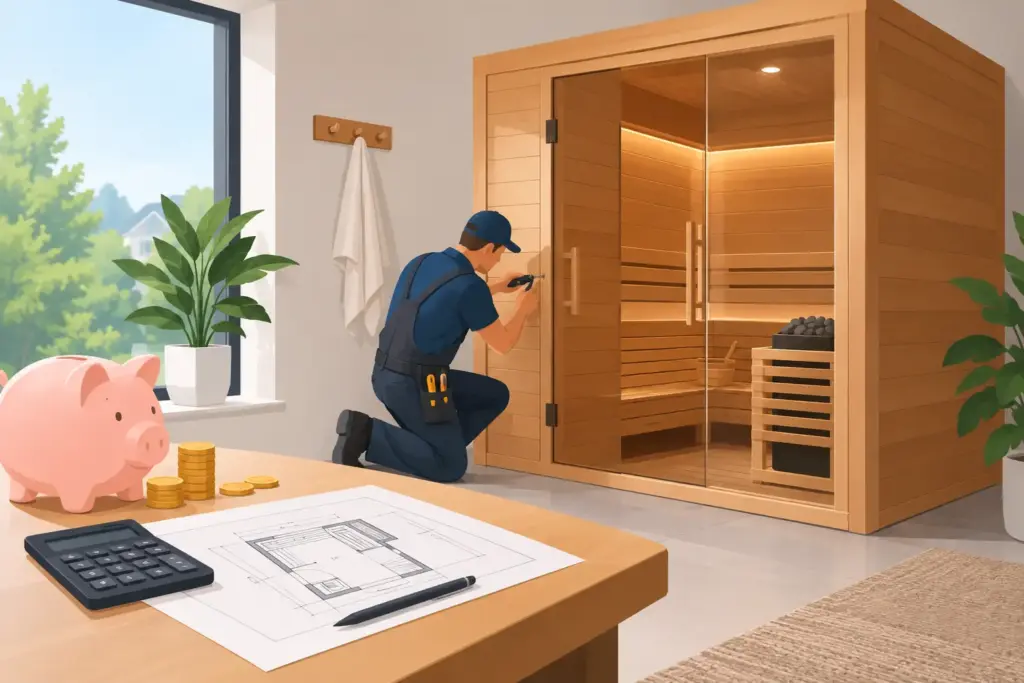
A sauna can be a straightforward wellness upgrade or a carefully built backyard destination. The difference usually comes down to preparation, not just the sauna itself. This sauna installation costs guide breaks down what US homeowners should budget for, where costs can rise, and how to choose a setup that delivers premium heat without unnecessary expense.
A quality sauna is not a place to cut corners. But a higher total project cost is not always a sign that you are overspending. A properly sized electrical circuit, a level foundation, correct ventilation, and professional assembly can protect the investment you have made in a hand-picked sauna from a trusted manufacturer.
Sauna Installation Costs at a Glance
Most residential sauna projects fall into three broad ranges. A plug-in indoor infrared sauna may have little or no professional installation cost beyond room preparation. A traditional sauna with a 240-volt heater often needs electrical work and may require assembly. A larger outdoor cabin sauna can involve site work, electrical trenching, delivery access, assembly, and optional upgrades.
As a practical planning range, homeowners commonly spend about $3,000 to $8,000 for a compact infrared sauna and simple setup, $7,000 to $20,000 for a traditional or hybrid sauna project, and $15,000 to $40,000 or more for a premium outdoor sauna with substantial site and utility work. Custom builds, difficult terrain, luxury changing rooms, and wood-burning installations can push a project beyond those figures.
Those numbers combine product and project expenses. The sauna itself is often the largest line item, but electrical and site conditions are the expenses most likely to surprise buyers.
What You Are Actually Paying For
A sauna quote can look dramatically different from one home to the next because the installation process is not identical. The right budget starts with the sauna format, then accounts for the home or backyard around it.
The sauna model and heat source
Indoor infrared saunas are often the least complicated to install. Many smaller units plug into a standard 120-volt outlet, although larger models may require 240 volts. They generally arrive as panel-built cabins and are designed for indoor rooms with a flat, dry floor. Assembly may be a manageable DIY project for capable homeowners, or a paid service if preferred.
Traditional electric saunas require more planning, but they offer the classic high-heat experience and the ability to create steam by pouring water over sauna stones when the heater is designed for it. A quality electric heater usually needs a dedicated 240-volt circuit, correctly sized wiring, and a licensed electrician. The heater, stones, control, and electrical installation should be treated as one system, not separate afterthoughts.
Hybrid saunas combine infrared and traditional heat, which can add equipment cost and electrical complexity but gives households more flexibility. If two people want different heat experiences, that versatility can be worth the additional investment.
Wood-burning outdoor saunas avoid some electrical-heater requirements, but they are not automatically less expensive to install. They need proper clearances, a correctly installed chimney, a safe noncombustible hearth or floor protection, and a realistic wood supply plan. Local codes, HOA rules, and insurance requirements deserve attention before you order.
Electrical work
Electrical installation commonly costs $800 to $3,500, though it can be lower for a nearby panel with easy access or substantially higher if the panel is full, undersized, or far from the sauna location. A new dedicated circuit for a sauna heater is not optional. It is a safety requirement and a performance requirement.
Ask an electrician to assess the heater’s voltage, amperage, breaker requirement, wire gauge, disconnect needs, and the route from the main panel. For an outdoor sauna, the run may involve trenching and conduit. For an indoor sauna on a second floor, it may involve opening and repairing finished walls. Both situations affect cost.
Do not assume a larger heater is better. Heater sizing should match the sauna’s interior volume, glass area, insulation, and construction. An improperly matched heater can create slow heat-up times, excessive energy use, or uncomfortable temperatures.
Foundation, flooring, and site preparation
Outdoor sauna site work can range from a few hundred dollars for a simple compacted gravel pad to several thousand for a concrete slab, paver patio, deck reinforcement, or challenging grading. The key requirement is a stable, level, well-drained base that suits the manufacturer’s specifications.
Barrel saunas are often easier to place than full cabin saunas, but they still need a solid level foundation. A beautiful cedar barrel placed on an uneven surface can develop door alignment issues, drainage problems, and unnecessary stress on the structure.
For indoor installations, focus on flooring, moisture, and access. Finished concrete, tile, luxury vinyl, and other durable water-tolerant surfaces are generally more practical than carpeting. A traditional sauna should not be placed in a damp, poorly ventilated room without considering how humidity will be managed. The room outside the sauna also needs enough clearance for assembly and comfortable use.
Delivery, access, and assembly
Freight delivery is different from bringing home a boxed appliance. Premium saunas can arrive in large, heavy crates, and standard delivery typically means curbside drop-off. If the driveway is narrow, the property has stairs, or the sauna must travel through a tight side gate, plan ahead.
Assembly costs vary based on sauna size and style. Panel saunas may be assembled in a few hours, while outdoor cabin kits can take a full day or more, especially when heater installation, roofing, and accessories are included. Professional assembly can be a smart choice for buyers who want a clean, efficient start and fewer chances for avoidable damage.
Before delivery day, measure gate openings, hallways, stair landings, elevators, and the final installation area. Check for overhead branches, soft ground, and long carrying distances. A little advance planning can prevent rescheduling fees or a difficult unloading day.
The Extras That Change the Budget
A sauna is more enjoyable when the surrounding experience is considered from the beginning. That does not mean every project needs every accessory. It means choosing upgrades that fit how you will actually use the space.
A premium heater and control can add meaningful cost, yet it can also improve heat consistency, scheduling, and daily convenience. Wi-Fi-capable controls are useful for some households, while others prefer the simplicity of a manual control. A glass door or large glass front adds visual appeal but changes heat-loss calculations and may require a stronger heater.
Outdoor lighting, a changing bench, a shower, cold plunge, robe hooks, drainage improvements, and landscaping can turn a sauna into a complete recovery zone. These are separate project costs, so it helps to distinguish between what is necessary for safe operation and what is a phase-two luxury addition.
If your goal includes contrast therapy, budget carefully. A cold plunge may require dedicated power, water management, and a convenient path between the sauna and plunge. The best setup is not necessarily the largest one. It is the one you will use consistently in every season.
How to Build a Smarter Sauna Budget
Start by setting a total project budget, not just a sauna product budget. Reserve 15% to 25% for preparation, electrical work, delivery variables, and installation unless you are buying a small plug-in infrared model with a confirmed easy location. That buffer is especially valuable for outdoor projects.
Then make decisions in the right order: choose the setting, determine how many people will use the sauna, select traditional, infrared, or hybrid heat, and verify utilities before falling in love with a specific model. A two-person sauna can be ideal for a master suite or gym, while a four- to six-person outdoor sauna may make more sense for families and entertaining.
Get firm estimates from qualified local tradespeople for electrical and foundation work. Provide the sauna’s specifications rather than asking for a vague “sauna hookup.” This gives electricians and contractors the information they need to price the job accurately.
Finally, protect the quality of the core purchase. Cheap materials, questionable heaters, thin benches, and unsupported controls may lower the upfront price, but they can cost more in repairs, safety concerns, and disappointment. Select Saunas follows a Zero Junk approach because homeowners should not have to sort through low-quality options while making a significant wellness investment.
Is DIY Sauna Installation Worth It?
DIY can reduce labor costs when the sauna is designed for straightforward assembly and you are comfortable following manufacturer instructions. It is most realistic for panel-built infrared units and some modular indoor or outdoor kits. Even then, having a second person available is often essential because panels, glass, and roof components can be awkward to handle.
DIY should not mean improvising electrical work, chimney installation, structural modifications, or foundation design. Use licensed professionals where local code and safety demand it. A sauna should feel restorative, not like a project you need to worry about every time you turn it on.
The most satisfying sauna projects begin with an honest look at the site and a clear budget for the complete experience. Choose the heat style you will use, prepare the space correctly, and invest where performance and safety matter most. Then the cost becomes more than a line item – it becomes a durable daily ritual at home.
Leave a Reply