
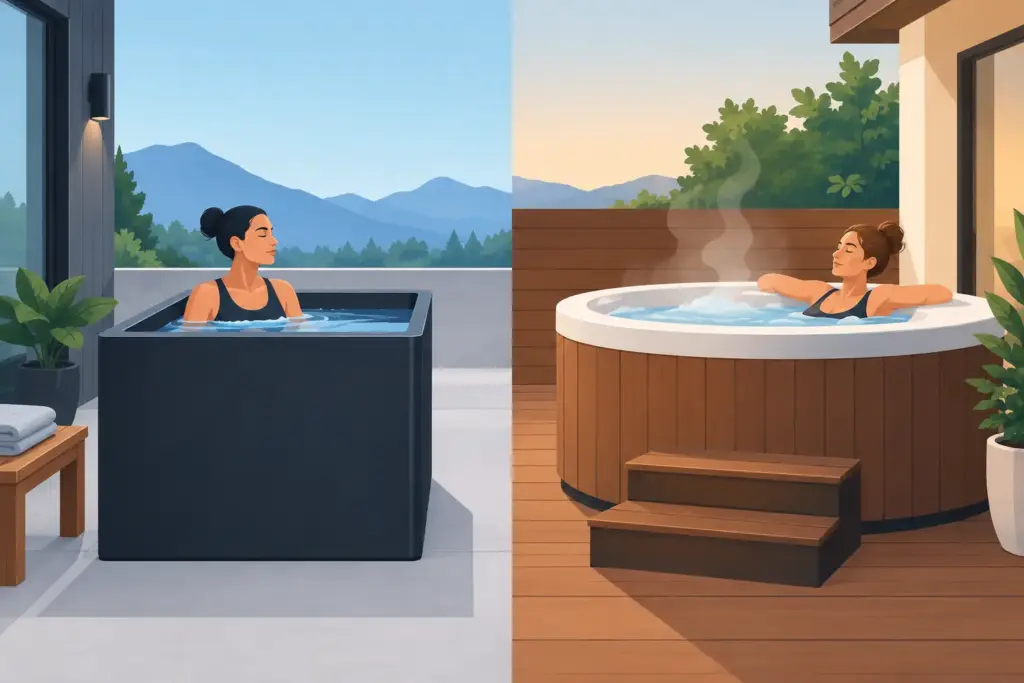
A cold plunge versus hot tub decision is rarely about which one is “better.” It is about the experience you want waiting for you after a workout, at the end of a long workday, or outside on a quiet weekend morning. One asks your body to adapt to intense cold. The other invites it to loosen up, stay awhile, and share the space with family or friends.
For a premium home wellness setup, both can earn their footprint. The right choice comes down to your recovery habits, tolerance for temperature extremes, available space, budget, and how much hands-on maintenance you want. Here is the practical comparison homeowners should make before committing to either one.
Cold Plunge Versus Hot Tub: The Core Difference
A cold plunge is a compact water vessel designed to hold cold water, commonly in the range of 39 to 59 degrees Fahrenheit. Depending on the model, water may be cooled with ice, a chiller, or an integrated cooling system. Its purpose is deliberate, short-duration cold exposure, not extended lounging.
A hot tub is designed for sustained soaking in heated, circulating water, often around 100 to 104 degrees. It is generally larger, may include jets and seating for several people, and serves as both a wellness amenity and a social feature. Where a cold plunge tends to be a focused solo ritual, a hot tub naturally becomes part of the household’s routine.
That distinction affects almost every buying consideration, from location and electrical requirements to how often you will actually use it.
What Each Option Feels Like in Real Life
Cold plunge: fast, focused, and intentional
Cold-water immersion is popular with athletes, sauna users, and people who enjoy a sharp reset. Many owners use a plunge after training, after heat therapy, or early in the morning when they want a bracing routine that requires very little time. Sessions are usually measured in minutes, particularly for beginners.
The appeal is simplicity. A quality cold plunge can take up far less room than a traditional hot tub and can fit neatly near a home gym, patio, outdoor shower, or sauna. For buyers building a deliberate recovery zone, it is often the most space-efficient addition.
There are trade-offs. Cold exposure is intense, and not every member of the household will enjoy it. If your goal is a feature that encourages long conversations, family use, or relaxed entertaining, a plunge will not replace a hot tub. It is a specialized tool with a dedicated audience.
Hot tub: restorative comfort with broader appeal
A hot tub is usually the easier wellness purchase to share. Warm water and hydrotherapy jets can feel especially welcome after yard work, travel, training, or an evening spent at a desk. The experience is gentler to approach than cold immersion, and it works equally well as a personal wind-down ritual or a gathering spot for two to eight people.
For homeowners creating a backyard destination, hot tubs also bring a strong lifestyle benefit. They pair naturally with outdoor kitchens, decks, covered patios, cabins, and fire features. In a master-suite or indoor wellness room, a compact hot tub can deliver the same sense of retreat.
The trade-off is scale. Hot tubs require more space, more water, and usually more ongoing energy use than a cold plunge. Their plumbing, filtration, heating, and jet systems also make product quality especially important. A cheaply built unit can turn a relaxing purchase into an avoidable service headache.
Health and Recovery: Choose the Outcome, Not the Trend
Both products can support a wellness routine, but neither should be treated as a cure-all. Individual response varies, and anyone with cardiovascular concerns, circulation issues, blood-pressure conditions, pregnancy, or a relevant medical history should speak with a qualified clinician before using extreme heat or cold.
Cold plunges are commonly used after exercise to feel refreshed and to manage the perception of post-workout soreness. Some people also value the alert, energized feeling that follows brief cold exposure. However, frequent cold immersion immediately after strength training may not suit every muscle-building goal. If hypertrophy is a priority, consider separating cold sessions from resistance workouts and discussing your routine with a coach or clinician.
Hot tubs are better aligned with relaxation, gentle muscle comfort, and winding down. Warm water can make stiff muscles and joints feel more comfortable, while jets add a massage-like sensation. The downside is that heat can be dehydrating and may cause lightheadedness if you stay in too long or drink alcohol. Keep sessions sensible, hydrate, and follow the manufacturer’s temperature guidance.
If you already own or are shopping for a sauna, contrast therapy may be the deciding factor. A cold plunge provides the classic hot-cold cycle: heat up, cool down, rest, then repeat if appropriate for you. A hot tub offers a different pairing – a longer, gentler warm-water recovery session after sauna use. Neither is automatically superior. The first is more invigorating; the second is more soothing.
Space, Installation, and Site Planning
Before comparing finishes, jets, or chiller specifications, plan the site. Water is heavy. One gallon weighs roughly 8.34 pounds, and the total weight of a filled hot tub includes the shell, equipment, water, and people. A professionally prepared concrete pad or properly engineered deck is often essential.
Cold plunges are generally lighter and more compact, but they still need a level, stable, water-safe location. Think beyond the unit itself: You need room to enter safely, remove the cover, drain the water, and access the equipment for service. Outdoor installations also need a strategy for weather exposure, privacy, drainage, and winter operation.
Electrical planning differs by model. Some smaller cold plunges may use a standard household outlet, while others need a dedicated circuit. Many hot tubs require 240-volt service and professional electrical installation. Confirm the exact product requirements early. It is much easier to coordinate an electrician and site preparation before delivery than after a premium unit arrives.
Indoor installation deserves extra care. Humidity, ventilation, floor drainage, waterproofing, and structural load all matter. In a finished basement, home gym, or primary suite, a smaller cold plunge may be easier to integrate than a large hot tub, but neither should be treated like an ordinary piece of furniture.
Cost of Ownership and Maintenance
The purchase price only tells part of the story. A well-built hot tub typically has a higher upfront cost because it includes a larger insulated shell, heater, pump system, filtration, plumbing, and often jets. It can also use more electricity to maintain temperature, particularly in cold climates or exposed locations.
Cold plunges range widely. An ice-based setup may appear inexpensive at first, but recurring ice costs and manual water changes can become tiresome. A premium chiller-equipped plunge costs more upfront but offers temperature consistency and makes regular use far more realistic. For many buyers, convenience is what turns an ambitious wellness intention into a habit.
Both require water care. Hot tubs need regular testing and balancing, filter cleaning, and periodic draining. Cold plunges also need sanitation, filtration, and scheduled water changes, especially if more than one person uses them. The specific maintenance schedule depends on the system, water temperature, use frequency, and whether the unit is kept indoors or outdoors.
Do not let low sticker price outweigh construction quality. Insulation, shell materials, service access, controls, covers, filtration, and manufacturer support determine whether an amenity feels premium years from now. Select Saunas follows a Zero Junk approach for exactly this reason: wellness equipment should support your routine, not create a second chore list.
Who Should Buy a Cold Plunge?
A cold plunge is often the stronger fit if you are an athlete, a committed sauna user, or someone building a compact personal recovery space. It also makes sense if you want a daily ritual that takes five minutes rather than an hour, or if your available footprint is limited.
Choose a model with dependable temperature control if you want consistency. Ice can work for occasional use, but precise chilling, filtration, and a well-fitting cover matter when a plunge will be part of your schedule several times a week.
Who Should Buy a Hot Tub?
A hot tub is the better choice when comfort, versatility, and shared use lead the list. It is ideal for households that want a backyard feature everyone can enjoy, from post-practice recovery to quiet evenings outdoors. It can also be a more welcoming starting point for people who like the idea of hydrotherapy but have no interest in cold exposure.
Prioritize insulation, efficient equipment, sturdy cabinetry, comfortable seating, and serviceable components. If your home has winters, a quality insulated cover and cold-weather performance are not minor details. They directly affect the ownership experience and operating cost.
When the Right Answer Is Both
For serious wellness enthusiasts, a cold plunge and hot tub can serve distinct purposes rather than compete. The plunge creates an intentional cold-exposure station. The hot tub becomes the relaxing, social, all-season soak. Add a traditional or infrared sauna, and the space can support everything from solo recovery to a full backyard wellness retreat.
This approach requires thoughtful planning around electrical capacity, drainage, circulation paths, privacy, and budget. It is worth designing the complete space before buying the first piece, especially if you want equipment that looks cohesive and remains easy to maintain.
The best choice is the one you will use on an ordinary Tuesday, not just the one that looks impressive on installation day. Picture your actual routine, choose hand-picked equipment built for that routine, and give yourself a wellness space you will be glad to step into year after year.
Leave a Reply