
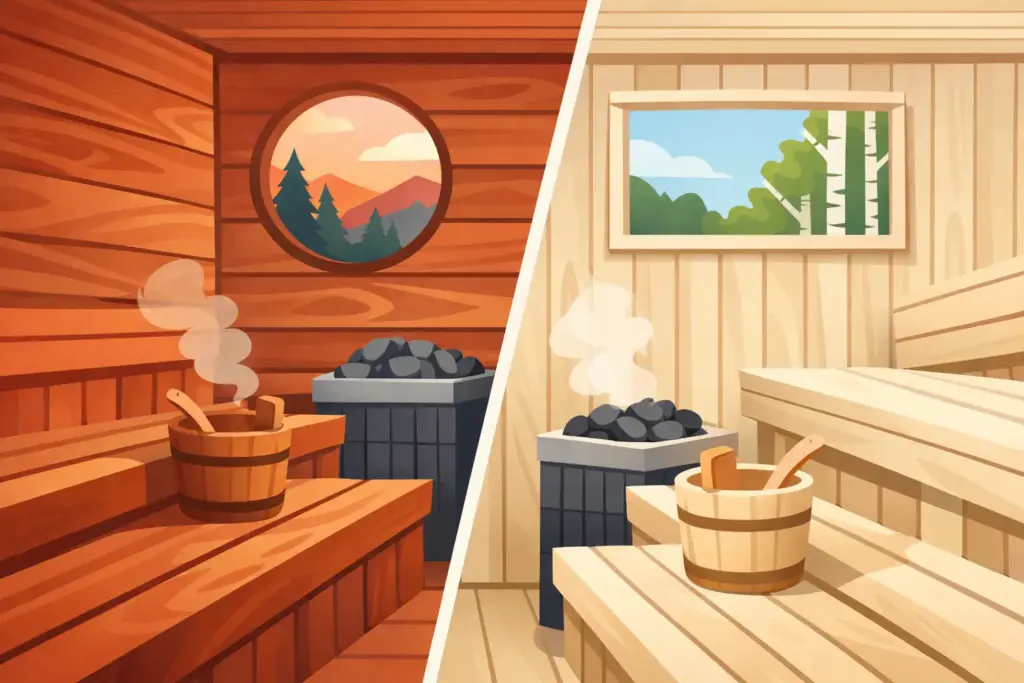
A sauna interior can look beautiful on delivery day and still be the wrong material choice. Once the room reaches full temperature, the wood has to stay comfortable against bare skin, tolerate repeated heating and cooling, and hold up to real family use. That is why the best wood for sauna interior is not simply the species with the richest color or strongest aroma.
For most residential buyers, clear western red cedar, aspen, and alder are the leading choices. Each can create an excellent sauna when it is properly milled, installed, and paired with a quality heater. The right one depends on where the sauna will live, how sensitive you are to scent, and whether you prioritize a classic sauna look or a lighter, more contemporary finish.
What Makes the Best Wood for Sauna Interior?
Interior sauna wood has a different job than framing lumber or outdoor decking. It needs to remain dimensionally stable through extreme temperature swings, resist splintering, and stay relatively cool to the touch. Benches, backrests, walls, and ceilings also need wood that performs well without relying on chemical treatments, sealers, or stains.
The best choices tend to share a few traits: low thermal conductivity, low resin content, a tight and comfortable grain, and natural resistance to moisture-related wear. Knots matter, too. They can heat up faster than surrounding wood, release resin in some species, and create a less refined surface. Premium sauna construction typically favors clear-grade boards, especially on benches and backrests where your skin makes direct contact.
A practical distinction helps here. The best wood for the sauna interior walls is not always the best wood for the benches. Cedar may be an ideal wall and ceiling material because of its aroma and character, while knot-free aspen can be the more comfortable bench surface for someone who wants a neutral, smooth feel.
Cedar: The Classic Premium Sauna Choice
Western red cedar is the wood many Americans picture when they imagine a premium home sauna. Its warm reddish-brown tones, distinctive grain, and familiar natural fragrance make it an enduring favorite. Cedar also has excellent natural resistance to moisture and decay, which helps it perform well in a high-heat environment over many years.
Cedar is lightweight and insulating, so it does not become uncomfortably hot as quickly as denser woods. It is also stable when sauna humidity rises and falls. For a backyard cabin sauna, a traditional indoor sauna, or a space where visual warmth matters, cedar gives the room unmistakable character.
There are trade-offs. Cedar’s aroma is a major selling point for many owners, but not everyone enjoys it. People with scent sensitivities, allergies, or a preference for a neutral sauna experience may be happier with aspen or alder. Cedar is also usually a higher-cost material, particularly in clear grades with minimal knots. That added investment is often justified in a premium build, but it is worth making intentionally rather than assuming cedar is automatically right for every household.
Aspen: Clean, Comfortable, and Nearly Scent-Free
Aspen is one of the strongest all-around answers for homeowners asking what wood belongs inside a sauna. It is pale, clean-looking, and has very little aroma. That makes it especially appealing for indoor wellness spaces, recovery rooms, and modern home gyms where a bright, minimalist look fits the surrounding design.
Its low resin content is a meaningful advantage. Aspen benches are comfortable to sit or lie on, and the wood does not create the sticky resin concerns associated with unsuitable softwoods. Its smooth texture also makes it a practical material for backrests, headrests, and other touch points.
Aspen does not offer cedar’s bold color variation or signature scent. Some buyers view that as a limitation, while others see it as exactly the point. A well-built aspen sauna feels quiet, refined, and spa-like. It is a particularly smart choice for users who want the heat, ritual, and recovery benefits of traditional sauna bathing without a strong wood fragrance.
Alder: A Warm Look Without Cedar’s Strong Aroma
Alder sits between cedar and aspen in appearance. It typically has a warm, light-brown to reddish tone that adds visual richness without becoming as dark or aromatic as cedar. It has a smooth surface, low resin content, and good dimensional stability, making it well suited for sauna walls, ceilings, and benches.
For buyers who like a warmer interior than aspen provides but do not want the pronounced scent of cedar, alder is an excellent middle ground. It can complement a cabin, basement lounge, or upscale primary-suite wellness area without dominating the room visually.
Alder may show more tonal variation than aspen, and its moisture resistance is generally not the central reason buyers choose it. Still, in a properly designed sauna with appropriate ventilation and no chemical finishes, it is a dependable premium interior material. The species is often selected because it feels polished and inviting at a price point that can be more approachable than clear cedar.
Other Woods You May See in Sauna Construction
Nordic spruce, hemlock, and basswood also appear in quality sauna interiors. The best option depends on the manufacturer, the product’s construction, and which surfaces the wood is used for.
Spruce is traditional in many Scandinavian-style saunas. It can be attractive and economical, but it needs careful grading because knots and resin pockets can be less desirable near benches. Hemlock has a subtle appearance and little scent, making it a common choice for infrared cabins and contemporary indoor saunas. Basswood is pale, low in odor, and comfortable to the touch, though its softer nature means it benefits from thoughtful care in heavily used spaces.
None of these are automatically inferior. A hand-picked sauna from an established manufacturer is designed as a system, not as a stack of individual boards. Heater placement, ventilation, bench construction, wood grade, and joinery all affect how the interior performs.
Woods and Finishes to Avoid Inside a Sauna
Do not use pressure-treated lumber, plywood, particleboard, MDF, painted boards, or chemically stained wood inside the heated cabin. These materials can off-gas when exposed to sauna temperatures, and many are not built to withstand repeated moisture and heat cycling.
Avoid highly resinous woods for seating and touch surfaces. Pine, for example, can work in certain exterior or structural applications, but knots and sap pockets can become a problem inside the hot room. Dense hardwoods are also usually poor bench choices because they absorb and hold more heat, making them uncomfortable against bare skin.
Interior wood should generally remain unfinished. Sauna-specific paraffin oil may be appropriate for protecting benches in some installations, particularly where body oils and frequent use are expected. Follow the manufacturer’s guidance rather than applying a conventional polyurethane, varnish, or wood sealer. A sauna is not a kitchen cabinet, and a glossy coating is not a quality upgrade.
Match the Wood to How You Will Use the Sauna
If you want a traditional sauna atmosphere with natural fragrance and rich color, cedar is hard to beat. If you are building a scent-neutral recovery room or simply prefer a clean, bright interior, aspen is often the best fit. Alder is an excellent choice when warmth of color matters but cedar’s aroma does not.
Also consider maintenance and lifestyle. A two-person sauna used a few times a week has different demands than a six-person family sauna beside a pool or home gym. Light-colored woods can make a compact interior feel larger, but they may show marks sooner. Darker cedar can be more forgiving visually, though its color and scent are more assertive.
This is where buying from a true sauna specialist matters. Select Saunas follows a Zero Junk standard because wood quality, bench surfaces, and construction details are not cosmetic footnotes. They directly affect comfort, longevity, and whether your investment feels as good in year five as it did on day one.
Care That Keeps Sauna Wood Looking Its Best
After each session, leave the door open and allow the cabin to dry fully. Use a clean towel on the bench, especially during long sessions or when using oils and lotions beforehand. Wipe benches periodically with warm water and a mild sauna-safe cleaner if needed, then let them air dry.
Do not soak the wood or use harsh household chemicals. Good ventilation and simple habits do more for interior wood than aggressive cleaning ever will. If a bench develops a rough spot over time, light sanding with fine-grit paper can restore a smooth surface without changing the character of the wood.
Choose the wood that supports the way you want to feel when you step inside: cedar for tradition and aroma, aspen for quiet comfort, or alder for warm, balanced style. Then give that wood the quality heater, ventilation, and care it deserves, and your sauna will remain one of the most satisfying rooms in your home.
Leave a Reply