
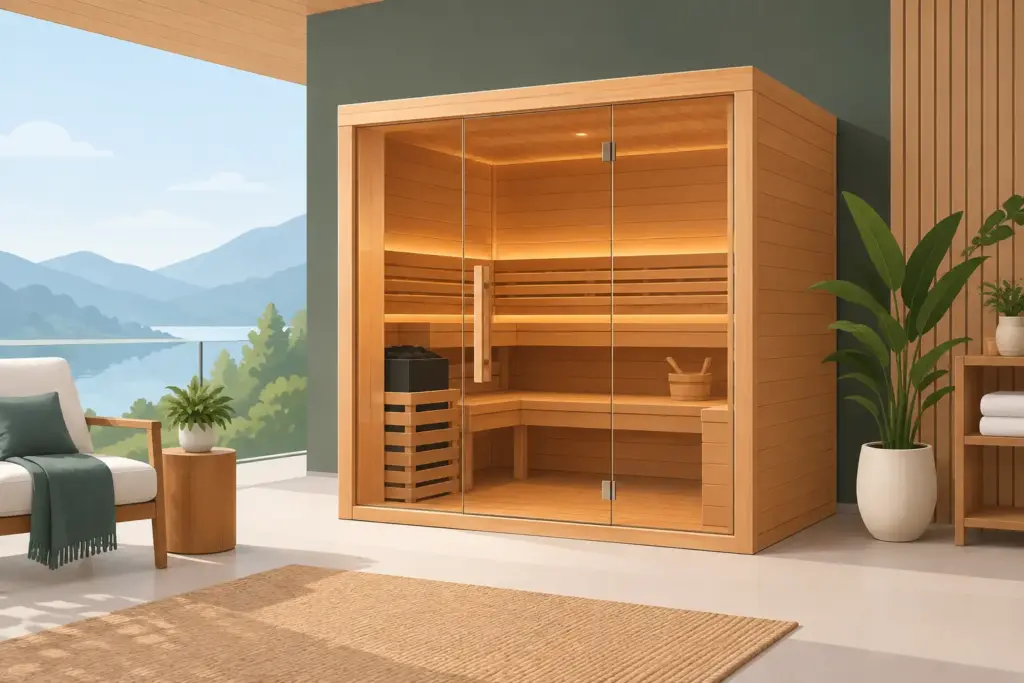
A four-person sauna sounds like a simple capacity label, but it is often the point where a sauna becomes a real part of family life. The best four person sauna kits give you room to stretch out, share a session without shoulder-to-shoulder crowding, and create a wellness space that feels generous without taking over the house or backyard.
For most homeowners, this is the sweet spot. It is large enough for a couple, a family, or post-workout guests, yet it remains far easier to place and power than a commercial-size room. The right choice depends on how you like to sauna, where it will live, how you plan to install it, and whether “four person” means four adults sitting upright or two people lounging in comfort.
What Makes the Best Four Person Sauna Kits Different?
A quality sauna kit is not just a wood box with a heater. It is a long-term home amenity exposed to high heat, moisture, changing temperatures, and frequent use. That is why construction, heater sizing, bench layout, insulation, door quality, and brand support matter more than a flashy spec sheet.
At Select Saunas, our Zero Junk policy is built around that reality. We hand-pick established sauna brands because a lower upfront price is not a win if thin materials, undersized heaters, weak controls, or poor-fit components turn ownership into a headache. You should feel confident that your sauna is built for the way people actually use it.
The best four-person options generally fall into three categories: traditional indoor sauna rooms, outdoor cabin or barrel saunas, and infrared or hybrid models. None is automatically best for every home. The better question is which format supports your preferred sauna experience.
Traditional, Infrared, or Hybrid: Choose the Heat First
Traditional sauna kits for deep, high-heat sessions
Traditional saunas heat the air and surrounding surfaces with an electric or wood-burning heater. Depending on the heater, ventilation, and personal preference, users typically enjoy much higher temperatures than infrared sessions. Add water to sauna stones and you create löyly – the soft burst of steam that many sauna purists consider essential.
A traditional four-person sauna works especially well for buyers who want a classic Nordic-style ritual, higher heat, and the flexibility to use humidity. It is also a strong fit for outdoor installations, home gyms, dedicated wellness rooms, and cabin properties. Electric heaters are practical for most residential settings; wood-burning stoves are a compelling choice where off-grid character and outdoor ambiance matter more than convenience.
The trade-off is infrastructure. Traditional rooms need proper electrical planning, ventilation, safe clearances, and a suitable location. An electric heater may require a dedicated 240V circuit installed by a qualified electrician. That is normal for a premium sauna, but it should be part of the budget from day one.
Infrared sauna kits for convenient indoor wellness
Infrared saunas use emitters to warm the body directly rather than heating the room to traditional sauna temperatures. Many homeowners appreciate their lower operating temperatures, straightforward indoor placement, and relatively quick routine: step in, relax, and get on with your evening.
For a four-person infrared sauna, look beyond the stated number of seats. Consider emitter placement, interior width, bench depth, wood species, controls, and electrical requirements. A roomy cabin with thoughtfully placed full-spectrum or far-infrared emitters can feel far more useful than a nominally larger unit with limited legroom.
Infrared is ideal for buyers who prioritize daily consistency, a gentler heat profile, and installation in a finished basement, master suite, or recovery room. It is not the same sensory experience as a traditional sauna. If pouring water on hot stones is non-negotiable, choose a traditional or hybrid model instead.
Hybrid sauna kits for households with different preferences
A hybrid sauna pairs a traditional heater with infrared technology. This can be an excellent answer when one person loves a high-heat session and another prefers infrared warmth after a workout. It also gives a busy household more ways to use the same footprint.
Hybrid units cost more and introduce additional components, so quality matters even more. The benefit is flexibility, not necessarily simplicity. For families who know they will use both modes, that flexibility can make a premium kit the better value over time.
Capacity Numbers Are Not the Whole Story
Four-person capacity usually means four adults can sit inside at once. It does not always mean four adults can recline, change positions, or enjoy a relaxed conversation without negotiating elbow space. Before choosing, review the interior dimensions and bench configuration, not just the capacity badge.
A two-tier bench layout is usually the most versatile arrangement in a traditional sauna. The upper bench provides the hotter, more traditional sauna experience, while the lower bench offers a milder seat and easier access. It also allows two people to lie down in many larger four-person cabins, even if four users are seated during social sessions.
For infrared rooms, consider whether the bench is a continuous L-shape, a straight bench, or separate seating. A corner configuration can make efficient use of a smaller room, while a wider rectangular cabin may feel better for taller users. If your household includes anyone over six feet tall, pay close attention to interior depth and ceiling height.
Indoor vs. Outdoor Four-Person Sauna Kits
An indoor sauna can feel wonderfully integrated into everyday life. A spare room, basement, gym, large bathroom, or primary-suite wellness area can become a private reset space just steps from the shower. Indoor installation protects the sauna from weather and often simplifies year-round access.
Still, the room must be appropriate. Traditional indoor saunas need heat-safe surfaces, correct ventilation, electrical access, and enough clearance for assembly and service. Measure doorways, stair turns, ceiling height, and the final location before ordering. The sauna may fit in the room while a large wall panel or crate does not fit through the route to get there.
Outdoor sauna kits bring a different kind of value. Walking into a warm cabin on a cold evening, then cooling down under open air, makes the ritual feel more complete. Outdoor models also preserve interior living space and pair naturally with a cold plunge, outdoor shower, deck, or pool area.
For outdoor placement, start with the base. A level, stable foundation is essential, whether that is a concrete pad, pavers, deck engineered for the load, or another manufacturer-approved surface. Plan drainage, pathway access, snow management, local setback rules, and electrical trenching before delivery day. Barrel saunas can be efficient and visually distinctive, while cabin-style outdoor saunas generally offer more usable interior volume and broader bench options.
Heater Sizing and Electrical Planning Matter More Than Extras
A beautiful sauna with an undersized heater will disappoint every time. Heater output must match the sauna’s interior cubic footage, construction, insulation, glass area, and climate exposure. Large windows and glass doors look exceptional, but glass changes heat-loss calculations. Outdoor saunas in cold regions may also need more heater capacity than a similarly sized indoor room.
Do not select a heater solely by the room’s advertised capacity. Follow the manufacturer’s sizing guidance and account for non-insulated surfaces. A properly matched Harvia, HUUM, Saunum, or other premium heater should heat the room reliably without being pushed to its limit each session.
Controls deserve the same attention. Some homeowners want a clean, integrated control panel. Others value app-enabled scheduling so the sauna is ready after work or training. Remote features are convenient, but safe installation, heater clearance, and manufacturer-approved controls always come first.
Details That Separate a Great Kit From a Regretful Purchase
When comparing four-person sauna kits, assess the details you will touch and depend on for years. Premium wood species, comfortable bench profiles, a solid door, quality hinges, safe lighting, and accurate controls improve every session. For traditional saunas, look at the heater guard, stone capacity, ventilation design, and whether the bench layout supports both sitting and reclining.
You should also ask what is included. Some kits arrive with the heater, stones, controls, lighting, and accessory basics; others require important components to be selected separately. There is nothing wrong with a configurable package, especially when it lets you choose the right heater or door style. The key is knowing the complete installed scope before you buy.
Delivery logistics are another practical consideration. Many sauna kits ship freight, often in substantial crates or pallets. Confirm where the shipment will be received, who can help move components to the installation area, and whether you need professional assembly or electrical work. A little pre-delivery planning protects your schedule and your investment.
Build the Sauna Around How You Will Actually Use It
The best choice is rarely the one with the longest feature list. It is the sauna that fits your space, your heat preference, and your routine well enough that you use it several times a week. A traditional outdoor cabin may be perfect for a family that values evening rituals. A four-person infrared room may be the smarter answer for a couple wanting dependable recovery in a finished home gym. A hybrid model earns its place when one household wants both experiences.
Before making a decision, sketch the installation area, verify your electrical path, and think honestly about who will use the sauna most often. Then choose the model with enough room to feel comfortable, not merely enough seats to satisfy a product label. A well-chosen four-person sauna becomes less like a purchase and more like the part of your home everyone looks forward to using.
Leave a Reply