
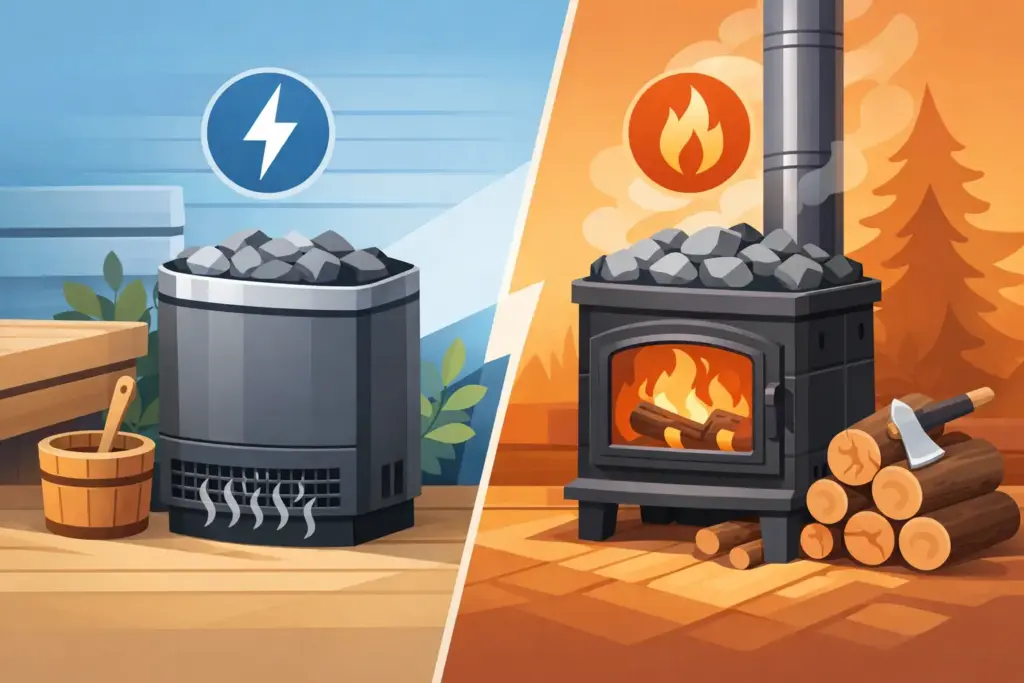
A sauna heater determines far more than how hot the room gets. It shapes where you can install the sauna, how quickly you can use it, what maintenance looks like, and whether each session feels like a convenient daily ritual or a slower outdoor escape. When comparing an electric versus wood sauna heater, the better choice is not universal. It depends on your site, routines, local requirements, and the kind of sauna experience you want to build.
For many homeowners, electric is the practical premium choice. For others, especially those creating an off-grid cabin retreat or a true backyard sauna destination, nothing replaces a well-built wood-burning stove. The goal is not to force either option into every project. It is to choose the heater that makes you want to use your sauna often.
Electric Versus Wood Sauna Heater at a Glance
Electric sauna heaters offer precision, convenience, and broad installation flexibility where suitable electrical service is available. Turn the heater on, set a temperature, and let the controls manage the session. Many models can be paired with external controls, timers, and, where permitted and configured correctly, remote-start features. This makes electric heat especially appealing for a home gym, master-suite sauna, basement build-out, or a backyard sauna located close to the house.
Wood-burning sauna heaters create a more elemental experience. You build and tend the fire, hear the wood crackle, and enjoy the distinctive aroma and softer rhythm of radiant heat. They do not require electrical power to generate heat, which is a major advantage for remote properties. But that independence comes with meaningful installation, safety, and daily-use responsibilities.
Neither type is inherently more authentic. A properly sized electric heater loaded with quality stones can produce excellent löyly – the enveloping burst of heat and steam created when water meets hot stones. A wood stove can make a spectacular sauna, but only when the chimney, clearances, ventilation, and firewood routine are handled with the same care as the sauna itself.
Choose Electric for Everyday Convenience
An electric heater is usually the best fit when you want dependable sauna sessions several times a week without adding a fire-building task to your schedule. It is also generally the more straightforward option for indoor saunas. There is no chimney passing through the roof, no ash to remove, and no need to bring dry wood through the home.
Temperature management is the biggest day-to-day advantage. Quality electric heaters use built-in or external controls to maintain a selected temperature with minimal attention from you. That consistency is valuable for people using the sauna after workouts, before bed, or as part of a regular recovery routine. You can focus on the session rather than checking the fire.
Electric heaters tend to heat efficiently, though warm-up time still depends on heater size, sauna volume, insulation, outdoor temperatures, glass area, and stone mass. A correctly sized heater is crucial. An undersized unit may run continuously and struggle to reach a satisfying temperature, while an oversized unit can heat too aggressively or create control challenges in a small room.
What electric installation requires
Electric is convenient, not plug-and-play. Most traditional sauna heaters require a dedicated 240-volt circuit and professional electrical installation. The exact amperage, wire sizing, disconnect requirements, and control placement vary by heater and local code. A premium sauna purchase deserves a qualified electrician who follows the heater manufacturer’s specifications rather than making assumptions.
For an outdoor sauna, you also need to plan the electrical route before selecting the heater. Long runs, trenching, panel capacity, and the distance from your home can affect project cost. Still, once installed, electric heat is exceptionally easy to live with.
The operating cost is typically predictable because you are paying for electricity rather than purchasing, storing, and seasoning fuel. Exact cost depends on local utility rates and session length, but homeowners often value the simplicity of pressing a button and knowing what to expect.
Choose Wood for Atmosphere and Independence
A wood-burning heater is the natural choice for many standalone outdoor saunas, lake properties, rural homes, and cabins. The fire becomes part of the ritual: gathering wood, lighting the stove, waiting for the stones to mature, and settling into a slower evening. For buyers who see sauna as a destination rather than another appliance, that process is a feature, not a drawback.
Wood heat can feel especially satisfying in cold climates. A properly installed stove throws substantial radiant heat while its stones hold energy for repeated water throws. The result can be a deeply traditional sauna experience with strong character and no dependence on the electrical grid during a power outage.
That said, wood-burning heaters ask more of the owner. You need a reliable supply of properly seasoned firewood, a dry place to store it, and the willingness to clean ash and inspect the system. Wet or poorly seasoned wood creates more smoke, burns inefficiently, and can contribute to creosote buildup. This is not a place to cut corners.
Wood stove planning starts with the chimney
The stove itself is only part of the system. A wood sauna heater needs the correct chimney components, heat shields, protective floor materials, roof penetration details, and manufacturer-specified clearances to combustible walls and benches. Local building and fire regulations may also affect where you can place the sauna and how the chimney must terminate.
This is why a wood heater is generally better suited to a dedicated outdoor sauna structure than an indoor residential installation. While indoor wood saunas can be done in the right circumstances, they require much more planning and may not be accepted by every jurisdiction or insurance provider. Confirm requirements before ordering equipment or beginning construction.
Ventilation matters with both heater types, but wood-fired setups demand especially careful airflow planning. A fire needs combustion air, and every sauna needs fresh air exchange for a comfortable bathing experience. Follow the sauna and heater manufacturer’s ventilation guidance rather than treating vents as an afterthought.
Compare the Real Costs, Not Just the Heater Price
The purchase price of a heater is only one part of the decision. Electric installations may require a new circuit, electrical-panel work, conduit, or trenching. Wood installations may require chimney systems, heat shielding, roof work, fire-rated protection, and a wood-storage solution. Depending on your property, either path can be the more expensive project.
Over time, electric heat is low-maintenance. Inspect stones periodically, replace deteriorated stones when necessary, keep the heater clean, and make sure controls operate correctly. There is no ash, soot, or chimney maintenance.
Wood heat has an ongoing fuel and maintenance commitment. If you have access to your own seasoned hardwood, the fuel cost can be attractive. If you purchase firewood, account for delivery, storage, and seasoning quality. Chimneys need regular inspection and cleaning based on use and local guidance. The right owner barely sees these tasks as chores. The wrong owner will begin skipping sauna sessions because they feel like too much work.
Heat Quality, Stones, and the Sauna You Build
A common misconception is that electric heaters produce dry heat while wood stoves produce steam. In reality, both traditional sauna heater types are designed to heat stones, and both can create steam when water is ladled over those stones. The quality of the experience depends heavily on heater sizing, stone arrangement, room construction, ventilation, and how much water you use.
Large stone capacity generally supports a gentler, longer-lasting heat and more satisfying löyly. Compact wall-mounted electric heaters may be ideal for smaller indoor rooms. Floor-standing electric heaters with substantial stone chambers can bring a more dramatic visual presence and a fuller steam experience to larger saunas. Wood stoves also vary widely in stone capacity, firebox design, and heat output, so match the stove to the room rather than choosing solely by appearance.
Glass doors and windows deserve special attention. They add light and style, but glass increases the sauna’s effective heating load. Outdoor saunas in northern climates, high-ceiling rooms, and spaces with extensive glass may need additional heater capacity. A hand-picked heater from an established brand is only part of the equation – it must be properly matched to your sauna’s real conditions.
Questions That Usually Decide It
If your sauna will live inside your home or serve as an easy, frequent wellness habit, electric is usually the clear answer. If you are building a remote outdoor retreat, want off-grid heat, and genuinely enjoy tending a fire, wood may be the better long-term fit.
Ask yourself how you expect to use the sauna on a busy Tuesday evening. If the answer is, “I want it hot after my workout with almost no setup,” choose electric. If the answer is, “I want to make an evening of it at the cabin or in the backyard,” a wood-burning stove may be exactly what makes the sauna special.
Select Saunas follows a Zero Junk approach because the heater is too central to the experience to treat as an accessory. Start with the sauna location, room dimensions, electrical or chimney realities, and the routine you want to keep. The best heater is the one that fits your property safely, heats your sauna correctly, and turns good intentions into a session you will actually take.
Leave a Reply