
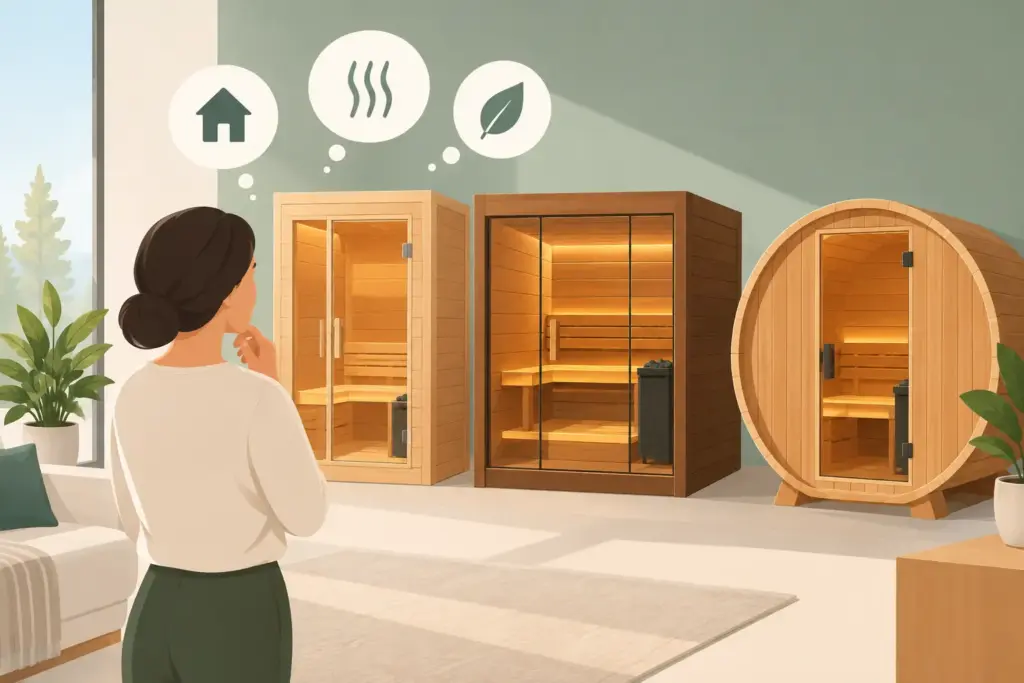
A sauna can become the most-used room in a home gym, primary suite, basement, or recovery space. It can also become an expensive frustration when the cabin is too small, the electrical plan was overlooked, or the heat experience does not match what you expected. If you are asking how to choose indoor sauna options for your home, start with the way you want to use it, then narrow the field by space, power, capacity, and construction.
The right answer is rarely the largest unit or the one with the most features. It is the sauna that fits your room, your routine, and the kind of heat you genuinely enjoy for years.
How to Choose an Indoor Sauna by Heat Experience
Your first decision is whether you want traditional heat, infrared heat, or a hybrid sauna. Each can be a premium home wellness investment, but they create distinctly different sessions.
A traditional sauna uses an electric heater and sauna stones to heat the air in the cabin. It is the classic sauna experience: higher ambient temperatures, a deep full-body sweat, and the option to ladle water over the stones for steam. This is the natural choice for people who love the ritual of a Finnish-style sauna, want strong heat, or plan to share sessions with family and friends. Traditional cabins generally need a dedicated 240-volt electrical circuit and enough room around the heater for required safety clearances.
Infrared saunas use panels to warm the body more directly at lower air temperatures. Many owners appreciate the gentler feel, faster warm-up, and straightforward plug-in installation available on certain smaller models. Infrared can be an excellent fit for a daily solo recovery habit, especially when a very hot room is not appealing. The trade-off is that it does not recreate the high-heat, stone-and-steam character of a traditional sauna.
Hybrid saunas combine infrared panels with a traditional heater. They offer the most flexibility for households where one person wants intense traditional heat and another prefers infrared. That versatility comes with a higher upfront investment and more installation considerations. Choose hybrid because you will use both modes, not simply because it has more components.
Start With Your Actual Location
Before comparing wood species, heaters, or accessories, measure the finished space. Include ceiling height, door swing, walkways, nearby walls, and the route from the delivery point to the installation room. A sauna that fits on a floor plan can still be difficult to bring downstairs, through a narrow hall, or around a tight turn.
Most indoor saunas work beautifully in a basement, home gym, spacious bathroom, spare bedroom, or dedicated wellness room. The best location is dry, level, and close to the electrical service needed for the model. A concrete basement floor is often ideal, while carpet is usually a poor choice. If the sauna will sit on an upper level, confirm that the floor is structurally sound and that access is manageable before delivery day.
Room ventilation also deserves attention. Traditional saunas need proper air movement to keep the experience comfortable and to help the room dry after use. Follow the manufacturer’s vent placement and clearance requirements rather than treating ventilation as an optional detail. A well-planned sauna room should feel peaceful, not stuffy.
Measure the Sauna and the Space Around It
Do not buy to the exact footprint alone. Leave the manufacturer-recommended clearance around the exterior, especially near heat-producing equipment, and allow room to open the door fully. You will also want enough access to clean around the cabin and service the heater when needed.
Ceiling height matters in two ways. The sauna itself must fit beneath the finished ceiling, and traditional sauna users generally benefit from benches positioned high enough to enjoy the best heat. Heat rises, so a very tall room around a compact sauna may require more heater output and longer warm-up times than expected.
Choose Capacity Based on How You Will Use It
Capacity labels can be misleading because a two-person sauna may technically hold two people without being equally comfortable for two adults during a 30-minute session. Think about your normal use, not only occasional entertaining.
A one-person unit is practical for a dedicated daily routine and can fit into surprisingly compact spaces. A two-person sauna is often the sweet spot for couples or for a solo user who wants room to stretch out. Three- and four-person models work well for families, while larger six- to eight-person cabins are best for households that will truly use them as a shared amenity.
Bench layout matters as much as the stated capacity. Straight opposing benches create a more social traditional sauna experience. L-shaped benches can make better use of a square footprint. If you are tall, pay close attention to interior depth and bench length. Comfort is not a luxury detail in a sauna purchase. It determines whether you reach for it every week or let it sit unused.
Plan the Electrical Work Before Ordering
Electrical requirements are one of the most common reasons a promising sauna choice needs to change. Smaller infrared models may use a standard household outlet, but many infrared units and most traditional electric-heater saunas require dedicated circuits. Larger traditional heaters often require 240-volt power and professional installation by a licensed electrician.
Confirm these details before placing an order: the sauna’s voltage, amperage, breaker requirement, wire run, and whether your electrical panel has capacity. If you are remodeling, it is typically more cost-effective to plan the sauna circuit alongside the rest of the work than to add it later.
A traditional sauna also needs the correct heater size for its cabin volume. An undersized heater can struggle to reach temperature, particularly in a cold basement or a cabin with more glass. An oversized heater is not automatically better either. The heater should be properly matched to the manufacturer’s stated room volume, insulation, glass area, and intended use.
Look Past the Cabin Photos: Construction Matters
Premium indoor saunas should feel solid in person and remain stable through years of heat cycles. Look for established manufacturers, dependable warranties, quality interior wood, insulated wall construction where applicable, durable benches, and components that can be serviced rather than treated as disposable.
Wood choice affects appearance, comfort, and long-term ownership. Cedar is valued for its distinctive aroma and natural resistance to moisture. Hemlock has a lighter, clean appearance and is a popular choice for infrared cabins. Aspen, spruce, and other sauna-grade woods are also used successfully by respected brands. The best material depends on the sauna design, your visual preference, and whether you are sensitive to strong wood scents.
Glass doors and windows create a more open look and can make a compact sauna feel less enclosed. They also change heat loss and heater-sizing needs. That does not mean avoiding glass. It means selecting a cabin engineered for the amount of glass it includes.
At Select Saunas, our Zero Junk policy is built around this principle: a sauna should be hand-picked from established brands with proven components, not chosen because it happens to be the cheapest box online. A lower price is not a deal if the cabin, controls, heater, or service support leaves you replacing parts before the sauna has earned its place in your home.
Decide Which Features Will Improve Your Routine
Accessories should support how you will use the sauna, not distract from it. For traditional sauna owners, a bucket and ladle, quality stones, backrests, a thermometer, and soft lighting can make each session more enjoyable. For infrared buyers, ergonomic seating, low-EMF design considerations, chromotherapy lighting, and easy-to-use controls may be higher priorities.
Remote or app-based controls can be useful, but confirm local electrical codes and the manufacturer’s safety provisions before expecting to preheat a sauna unattended. A simple, reliable control panel is often the better long-term choice for buyers who want fewer variables.
If your wellness space includes a cold plunge, shower, or training area, consider the full traffic flow. You want towels, hydration, and a place to cool down nearby without turning the route through your house into a slippery inconvenience. The most successful sauna rooms are designed around the whole recovery ritual.
A Quick Pre-Purchase Check
Before finalizing an indoor sauna, make sure you can answer these questions clearly:
- Do you prefer traditional heat, infrared heat, or both?
- What are the exact room dimensions, access measurements, and required clearances?
- How many adults will use the sauna at one time in normal life?
- Does your electrical panel support the required dedicated circuit?
- Is the heater properly sized for the cabin, glass area, and room conditions?
- Does the construction come from a trusted brand with parts and support available?
A premium indoor sauna is not a generic appliance. It is a long-term part of your home and a personal space that should feel easy to use from the first session. Choose the heat you look forward to, give the installation the planning it deserves, and invest in a cabin built to make your wellness routine feel like a permanent upgrade.
Leave a Reply