
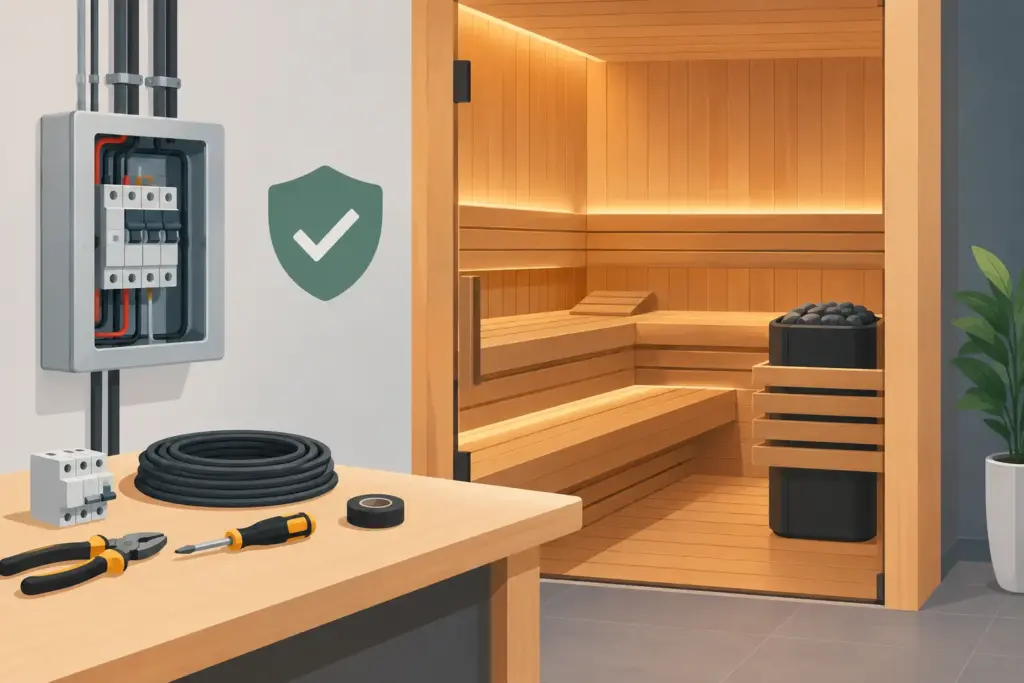
A sauna can look like a straightforward backyard upgrade until the heater arrives and the electrical requirements become real. A premium sauna needs more than an available outlet. It needs the correct voltage, a dedicated circuit, properly sized wire, and an installation that follows the heater manufacturer’s instructions and local code. This sauna electrical guide helps you plan those details before delivery day, so your investment heats properly from the first session.
For most homeowners, the smartest move is to involve a licensed electrician early – ideally before choosing the final sauna and heater package. The electrician does not need to design your wellness space for you, but they do need accurate product specifications. That is where a hand-picked sauna package, clear heater documentation, and expert selection support make a meaningful difference.
Start With the Sauna Heater, Not the Room
Your electrical plan is driven primarily by the heater. Traditional electric sauna heaters create high, sustained heat and usually require a 240-volt dedicated circuit. The heater’s kilowatt rating determines the breaker size, wire gauge, disconnect requirements, and whether your existing electrical panel has enough capacity.
A compact one- or two-person indoor sauna may use a smaller heater, while a larger family sauna, outdoor cabin sauna, or glass-heavy design may need substantially more power. The sauna room’s cubic footage matters, but so do heat-absorbing surfaces. Glass doors, windows, tile, stone, and masonry can increase the effective volume the heater must warm. Choosing a heater solely by the physical size of the room can leave you with slow heat-up times and a disappointing experience.
Infrared saunas are a different electrical category. Many smaller infrared models operate on a standard 120-volt household circuit, while larger units may require 240 volts. They generally draw less power than a traditional heater, but that does not mean every model can share a circuit with nearby gym equipment, lighting, or a refrigerator. Always follow the specific sauna’s electrical label and installation manual.
Hybrid saunas deserve especially careful planning. Because they combine infrared elements with a traditional heater, their power needs can be more involved. Verify whether the systems require separate circuits, a particular control configuration, or a 240-volt connection before construction begins.
The Core Requirements in This Sauna Electrical Guide
Every electric sauna installation is product-specific, but a few requirements are common across quality residential systems. Treat these as planning checkpoints, not a substitute for manufacturer instructions or a licensed electrician’s assessment.
Dedicated circuits protect performance
An electric sauna heater should be on a dedicated circuit. In plain terms, that circuit serves the sauna alone. A heater that shares power with another major appliance can trip breakers, perform inconsistently, or create an unsafe installation.
A dedicated circuit also makes service easier later. If something needs attention, the electrician can isolate the sauna system without affecting the rest of your home.
Voltage must match the equipment
Most North American electric sauna heaters are designed for 240 volts. Do not assume a nearby dryer outlet or workshop receptacle is compatible. Outlet type, amperage, wiring, and code requirements all matter, and many heaters are hardwired rather than plugged in.
A 120-volt infrared sauna is not automatically simpler, either. The correct receptacle, dedicated branch circuit, and available load capacity still need confirmation. Never use an extension cord or power strip for a sauna. Heat therapy equipment draws substantial current for extended periods, which is exactly where improvised connections become a poor gamble.
Breaker and wire sizing are not guesswork
The heater manual specifies the required breaker size and conductor size. Your electrician uses those figures, along with wire run length and local requirements, to determine the correct installation. Installing an oversized breaker to stop nuisance tripping is not a solution. It can allow wiring to overheat before the breaker responds.
This is one reason Select Saunas encourages homeowners to select from established brands with complete specifications. You literally cannot build a dependable sauna experience on vague electrical information or mismatched components.
Controls need their own planning
Modern sauna controls can be mounted inside or outside the sauna room depending on the model and installation instructions. Some systems use temperature sensors, low-voltage control wiring, Wi-Fi capability, or remote control panels that must be located away from direct heat and moisture.
Do not let framing, paneling, or exterior cladding cover a required wire path before the control layout is confirmed. A little coordination during rough-in can prevent opening a finished wall later.
Check Your Electrical Panel Before You Buy
The age and size of your service panel can affect which sauna is practical. A newer 200-amp service often has room for a residential sauna, but panel capacity is never something to assume. Homes with electric ranges, dryers, HVAC equipment, EV chargers, hot tubs, and workshop tools may already carry a significant electrical load.
Your electrician can perform a load calculation to determine whether the panel can safely support the sauna heater. Sometimes there is adequate capacity but no physical breaker space, which may call for a subpanel. In other cases, a service upgrade is the right long-term answer, especially if you are also adding a cold plunge chiller, outdoor lighting, or other wellness equipment.
This is a trade-off worth considering before you fall in love with a larger heater. A smaller sauna or lower-kilowatt configuration may reduce electrical work, but it can also change heat-up time and performance in cold weather. The best choice balances the sauna experience you want with the infrastructure your home can support.
Indoor and Outdoor Sauna Electrical Differences
Indoor installations usually benefit from shorter, more protected wiring runs. A basement gym, primary suite, or dedicated recovery room can often be planned during a remodel, with the circuit routed through open walls or ceilings before finishes go in.
Outdoor saunas introduce additional considerations. The circuit may need to travel underground or across a substantial distance from the house. That can affect trenching, conduit, wire sizing, weather protection, and project cost. The sauna’s location may also influence disconnect placement, lighting needs, and how the electrician protects equipment from rain, snow, and seasonal temperature changes.
An outdoor sauna near a pool, hot tub, shower, or cold plunge needs particular attention. Water and electricity demand careful separation, proper bonding and grounding where applicable, and compliance with local electrical rules. Your electrician should understand the complete site plan, not just the sauna heater.
Permits, Inspections, and Local Code
Electrical permits are not red tape to work around. They create an inspection trail that helps protect your home, insurance position, and resale value. Requirements vary by municipality, so even two nearby towns can treat an outdoor sauna installation differently.
A permit may be needed for a new 240-volt circuit, subpanel, trench, or service upgrade. Depending on the sauna structure and location, you may also need building or zoning approval. Plan for this timeline before scheduling delivery, particularly for a backyard installation during the busy spring and summer season.
The National Electrical Code provides a baseline, but your local authority has the final word. Manufacturer instructions are equally important because listed sauna equipment is tested and intended to be installed in a particular way. If local code and product instructions differ, the electrician should resolve that question before work proceeds.
Give Your Electrician This Information
A productive electrician visit starts with complete information. Provide the sauna model, heater model, heater kilowatt rating, voltage, manufacturer wiring diagram, control model, and proposed sauna location. Also show them the main panel and describe any planned additions, such as an EV charger, hot tub, or cold plunge.
Ask direct questions: Is there enough load capacity? Will the heater be hardwired? Is a subpanel needed? Where should the disconnect and controls go? Does the project require permits or trenching? Clear answers now are far less expensive than changing a finished sauna room later.
Avoid the Shortcuts That Create Expensive Problems
The most common sauna electrical mistakes are predictable: relying on an extension cord, using a shared circuit, selecting a heater before calculating room volume, hiding control wiring without a plan, and hiring someone who does not pull permits when permits are required.
Another frequent mistake is treating a sauna heater like a generic appliance. Premium heaters from brands such as Harvia, HUUM, Saunum, and others are engineered systems. Their stones, sensors, controls, clearances, and electrical requirements work together. Substituting parts or improvising wiring undermines the performance you paid for.
A well-planned electrical installation is mostly invisible when the sauna is complete. That is the point. You should be thinking about the heat, the steam, and the recovery time – not whether a breaker will hold. Choose the sauna that fits your space, bring in a qualified electrician early, and give the installation the same quality standard you expect from the sauna itself.
Leave a Reply